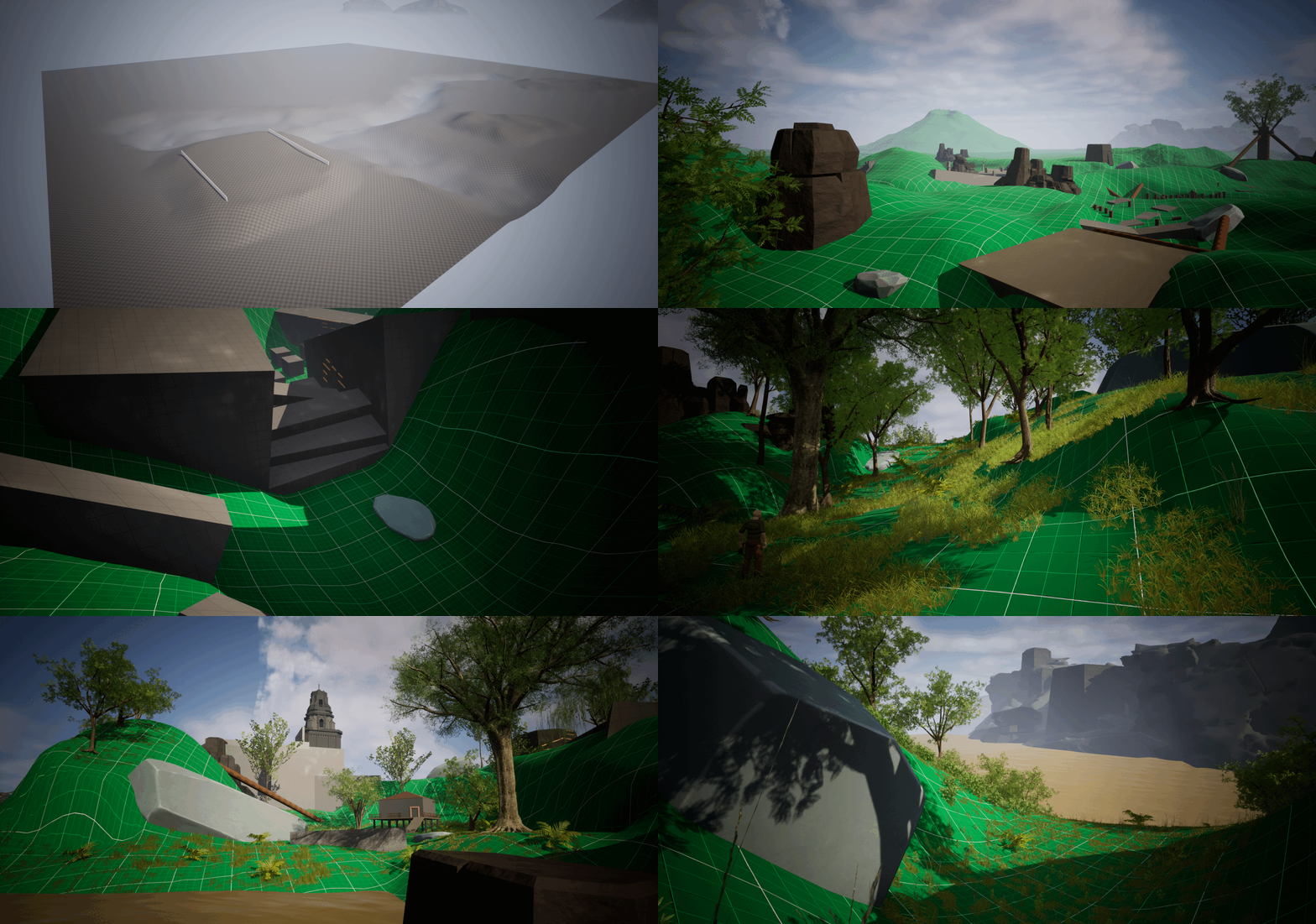
The Hidden Conquest
Third-Person Turn Base RPG

THE VOLCANIC ISLAND
Quest & Open World Level Design
Platform: PC & Consoles
Team Size: 1
Role: Quest and Level Designer
Tools: UE5
Period: 60 Days
Build URL: https://bit.ly/3AqeX3q
Level Walkthrough
❖ Project Overview ❖
I fully committed to this project about a year ago. And the idea was to continue working on the design model from my previous project, but more on a technical side. Due to the complete theoretical nature of that model, this time the vision was to make something playable on the basis of it. At the same time, I want to sharpen up my existing skills and work on some new ones. So these are some of the key skill sets that were picked and worked further upon:
-
Advancing more in Unreal Engine 5.
-
Open world design.
-
Non-linear level design.
-
Combat zones and spaces.
-
Quest design.
❖ Emotions and Experience Design ❖
The initial thought was to set a core feel, experience and intentions for this level. So the set of emotions and experiences were selected for setting up the plot and world lore.
-
Concept of remembrance and repetitive loops.
-
Moral choices, good or evil.
-
History and culture.
-
Adventure.
❖ Narrative and Plot ❖
In the present times, set on an island next to amazon with dense flora and fauna. There are four narrative elements that set the whole act in structure.
-
The rainforest and the island itself, with the world setting similar to the Amazon jungle.
-
The hidden tribes living there.
-
Foreign research facilities and their scientists.
-
Retired army veteran, main protagonist and playable character hired by the facility.
Island, Rainforest, tribal culture, and history:
The main island itself is divided into three zones occupied by tribal people.
-
The dense jungle.
-
High mountains.
-
And the active volcano at the end.
The tribes are a mix of modern and historic cultures. They trade with the outside world and among themselves. For them, the volcano is a sacred temple, and they worship it like any other god for keeping the jungle in balance. The volcano is active and can erupt at any time, so the tribal folks think that by worshiping it, the volcano will not erupt and will keep things in order.
Research facility and scientists:
The American-based small start-up mostly works on volcanic research. The facility has several research specialists. The facility asked them to go to the island and start researching the volcano. They were told to come back only after the research was complete.
Almost fifteen of them went to the island and started the research. They were spending time all over the jungle and around the volcano collecting data from the planted devices. A volcano is sacred, and people only go there to worship. Time went by, and tribal people started to think that scientists were upsetting the volcano by going there with those devices.
All of a sudden, one day, the volcano erupts and brings devastation to the whole jungle. Impacting the trading market and food sources in the jungle.
Tribal groups thought it was all because of researchers and the scientists. They blamed them, started hunting, even killing the scientists, stealing the research and vandalising all their research devices. After this tribes fenced their homes, created camps all over the jungle where they operate, trade and hide all the research data.
Researchers went on hiding. And facilities in America got impatient when they didn’t get any updates from scientists for months.
Protagonist and retired army veteran:
A retired PTSD soldier with bad choices in past that have cost him family, friends and career. Now he is trying to be morally decisive and make meaningful choices to shape his future and a better world around him.
After waiting for months, the facility hired this man to go there and collect all the research back to the United States. They didn’t even ask to bring the researchers safely. The protagonist must go on this adventure and decide what should be done. And he is our main playable character.
❖ Quest Design ❖
The idea here was to combine all the narrative Legos into interactive gameplay with an add-on of meaningful moral choices and branching.
Design goals:
-
Morally ambiguous choices.
-
Non-linear narrative.
-
Incentivizing more than one play style.
-
Multiple endings.

❖ Open World and Level Design ❖
The emphasis here is to embed the narrative and quest design to craft a moment-to-moment experience while player is traversal through the world.
Design goals:
-
Open-world exploration based on risk and reward.
-
Active path finding and traversal puzzles.
-
Timed platforming.
-
Combat spaces and check post design.
-
Multiple gameplay styles – stealth, offensive, line to line combat.
❖ Pre Production ❖
Reference Gathering:
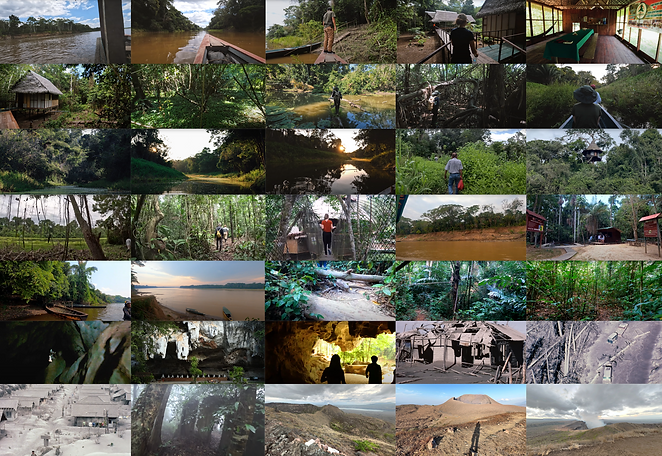
Based on the narrative and plot, it was quite clear that the world setting will be heavily influenced by the jungle of amazons. Hence a photo library was developed to set the look and feel of the level.
World Design and Level Layout:
Basically, the island is divided into three zones with each emphasising the different look, feel and active traversal. Before getting into the editor, the idea was to go as close as possible with the pen and paper.
-
The dense jungle – More traversal on foot and path finding.
-
High mountains – Ledge climbing and timed platforming.
-
Active volcano – A long, relaxing hike to the top.

Defining the metrics:
It was already decided that the scale of the world had to be a bit large to showcase the epic aura of the jungle. There were a few parameters that were considered:
-
Overall scale of terrain height, mountains and biomes.
-
Distance was considered to keep the active traversal engaging between areas.
-
Cover heights for enemy check posts.
❖ World and Level Blockout ❖
Terrain and Rivers:
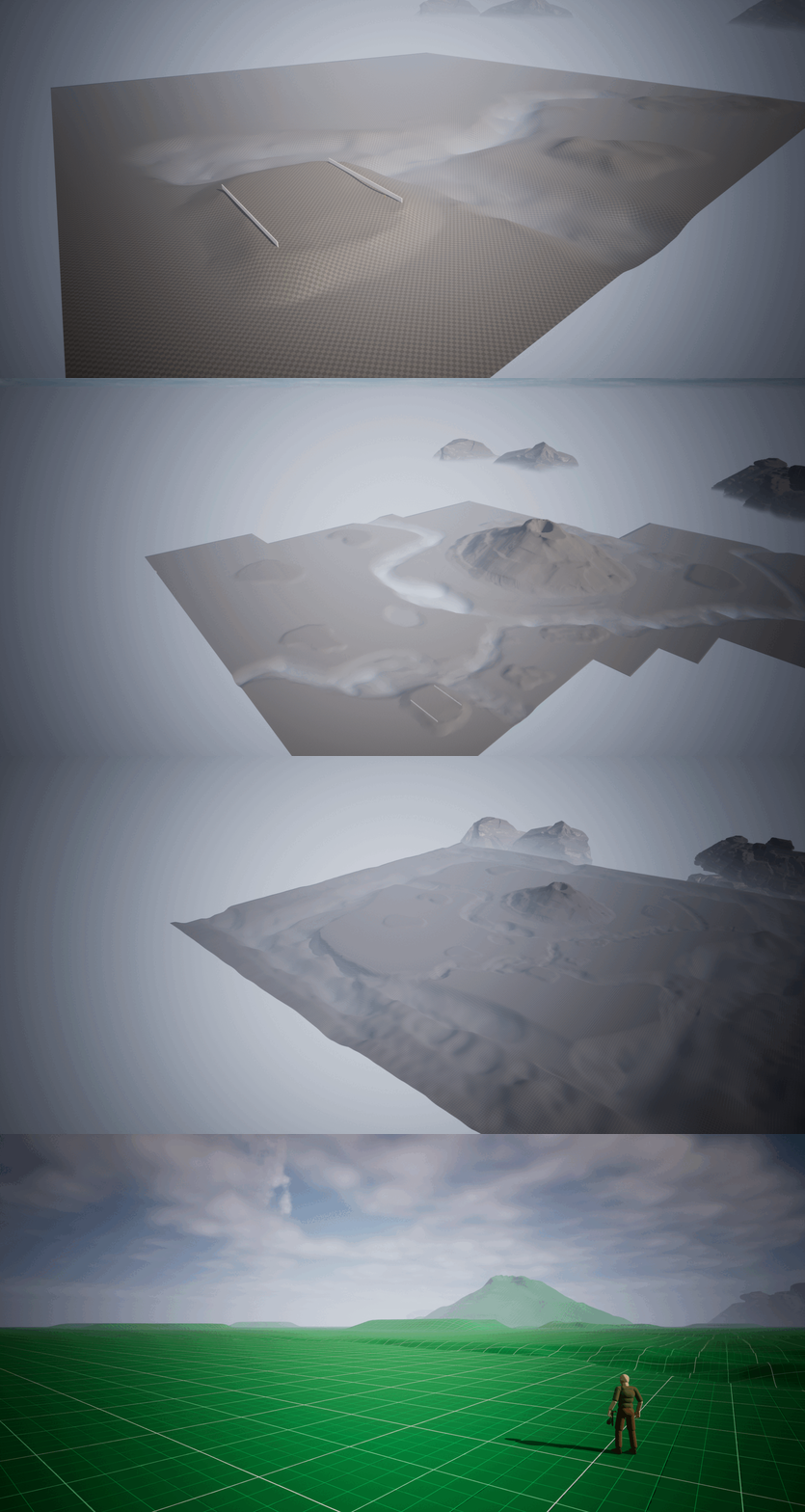
It was already decided that the scale of the world had to be a bit large to showcase the epic aura of the jungle. The idea was to divide the three zones by rivers. The canals and rivers are an important way of navigation in the jungle. As a result, it gave shape to the map that was sensible and cohesive to the overall traversal.
Open-World Design:
To ensure the true open-world jungle experience, there were a few core concepts that later influenced the level design.
-
Each zone had a minimum of three points of interest [POI].
-
Later, they were connected with paths going to one or more POIs.
-
Enemy check posts and narrative requirements were also considered.

Active gameplay traversal:
This is when the moment-to-moment gameplay comes into account, including traversal puzzles, timed platforming, and the combination of character systems such as jump, climb, crouch, etc.
The total combination of such systems was considered for every zone, and based on them, every path was designed. The first zone's set of combinations included walking, crouching, crawling, climbing, slopes, and jumping.


Walking and Crouching
The continuous combination of walk and crouch was used to keep the player engaging.
Crawl
Crawl was mostly used in a stealth position and crossing caves.
Jump
Mostly used in jumping over cliffs, timed platforming over heighted mountains.
Swim
To travel from one zone to another, there was always a river to cross.
Slopes
For sliding across terrain and mountains.
Ledge Climbing
Inherent mode of navigation in the jungle. Also, there are possible puzzles in climbing ledges, as it is not just linear climbing, but many options to choose from while climbing. So one option might be a dead end, and the other just a way to the top.
Zip Lines
Usually placed at a height to land on the ground, to skip the travel on foot, and to cross huge mountains from heights.
Swinging
Mostly used to create the sense of fear from heights and to add more variety in the traversal.
Door and Gates
Mostly used as an obstacle to pass.
Biomes and Trees:
The active traversal was tested for multiple iterations. And based on the look and feel of each zone, the flora and fauna were populated.

Checkpost Design:
There are two main checkposts where the main quest has taken place, and all the others can be randomly encountered while exploring the world.
The idea is to provide each combat zone with multiple play styles to approach. Either it’s be stealth, head to head or traditional cover shooter. There were many elements considered while designing them, and some of the important ones are:
-
Main checkpost's difficulty is based on the quest design and pacing.
-
Random encounters totally rely on the traversed path. The easier and simpler the path, the less challenging the combat zone.
-
Difficulty parameters are mostly based on the design, cover placement, type and number of enemies.
-
A true open-world approach with multiple entry points to approach the zones.
-
Multiple gameplay styles with the benefits of each.

Exploration-based Loot Placement:
The ideology is old school risk and reward. Hard path, deep exploration, better loot. There were some common design goals that were kept in mind while doing it.
-
The items with guns of multiple types and melee items such as a knife, an axe.
-
Designing with player intuition of open-world exploration.
-
The harder the traversal, the better the loot.
-
Incentivizing the exploration of hidden, unexpected paths and areas.
-
The harder the enemy encounter better the reward. Hence, easier traversal in the jungle.

❖ Blockout Evolution ❖